Welcome to the May, 2026 Summary of the International Journal of Automation and Smart Technology.
Editorial Office, AUSMT.
Read more

The International Journal of Automation and Smart Technology (AUSMT) is a peer-reviewed, open-access journal devoted to publishing research papers in the fields of automation and smart technology. It is currentl
Welcome to the May, 2026 Summary of the International Journal of Automation and Smart Technology.
Editorial Office, AUSMT.
Welcome to the April, 2026 Summary of the International Journal of Automation and Smart Technology.
Editorial Office, AUMST.
[Call for Papers] AUSMT is pleased to announce that our new Special Issue (2026-01-01): AI-Driven Vision Systems and Intelligent Control in Robotics is now opened for submission!
Lead Associate Editor: Prof. Chih-Chiang Chen, National Cheng Kung University (NCKU), Taiwan.
Lead Guest Editor: Dr. Muhammad Ahmad Baballe, Nigerian Defence Academy (NDA), Nigeria.
Submission Deadline: October 30, 2026.
Welcome New Associate Editor, Prof. Jun Ishikawa!
The International Journal of Automation and Smart Technology (AUSMT) is delighted to announce that Prof. Jun Ishikawa has joined our Editorial Board as the newest Associate Area Editor!
The International Journal of Automation and Smart Technology (AUSMT) has achieved a massive increase of nearly 47% in its overall SJR, rising from 0.134 to 0.197.
Editorial Office, AUSMT!
ARTICLES
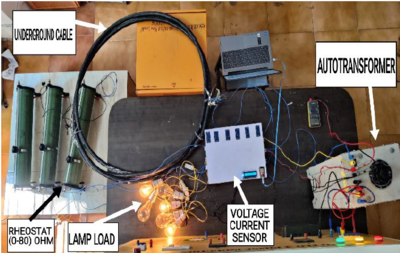
1. Identification and Detection of Electrical Fault Location in Underground Cables Using Machine Learning Algorithms. (2026). International Journal of Automation and Smart Technology, 16(1). https://doi.org/10.5875/schx4x49
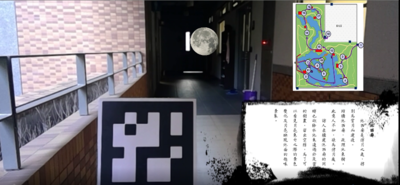
2. Immersive Navigation in the Lü-dao Garden: Integrating AR, VR, and Virtual Agents. (2026). International Journal of Automation and Smart Technology, 16(1). https://doi.org/10.5875/dbx8dv83
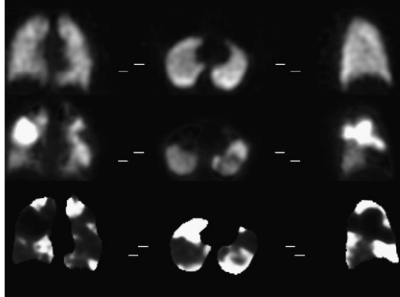
3. Multi-CBCS: Multimodal Contrast Bolus Consistency Network for Pulmonary Embolism Detection by Integrating CTPA and Lung Perfusion Imaging. (2026). International Journal of Automation and Smart Technology, 16(1). https://doi.org/10.5875/7v5fw044
Special Issue (25-03-01): Smart Healthcare: The role of Wireless Technology in Medical Innovation
1. Leveraging Continuous Glucose Monitoring Data to Forecast Future Nocturnal Hypoglycemia Episodes with Extended Prediction Horizon. (2026). International Journal of Automation and Smart Technology, 16(1). https://doi.org/10.5875/7q8dqh61
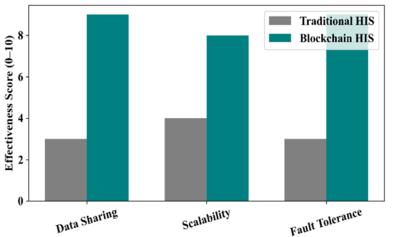
2. Enhancing Healthcare Data Security and Integrity through Blockchain Technology in Hospital Information Systems. (2026). International Journal of Automation and Smart Technology, 16(1). https://doi.org/10.5875/eg69ks62
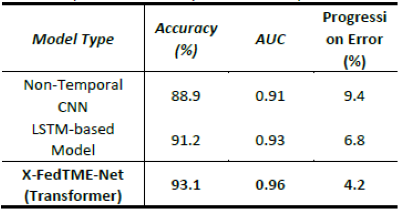
3. An Explainable Federated Temporal Multimodal Ensemble Deep Learning Model for Early Diagnosis and Progression Prediction of Parkinson’s and Alzheimer’s Diseases Using X-FedTME-Net. (2026). International Journal of Automation and Smart Technology, 16(1). https://doi.org/10.5875/g0qvad40
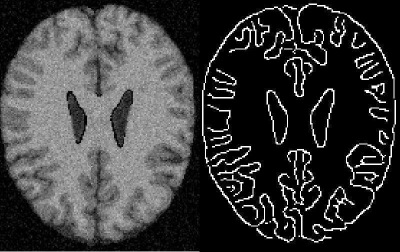
4. High Impulse Noise Removal and Edge Detection in MRI Images Using Advanced Filtering Techniques. (2026). International Journal of Automation and Smart Technology, 16(1). https://doi.org/10.5875/853y5407
Special Issue (25-04-01): Human-Computer Interaction in the Virtual Reality: Challenges and Solutions
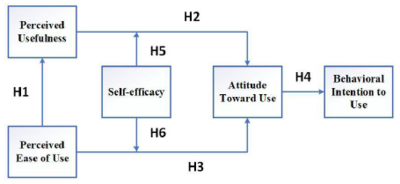
1. Using the Technology Acceptance Model to Investigate the Effect of Self-Efficacy on Gesture Control in Virtual Reality. (2026). International Journal of Automation and Smart Technology, 16(1). https://doi.org/10.5875/kdbqse30
Special Issue (26-00): Selected Papers from Automation 2025 Conference
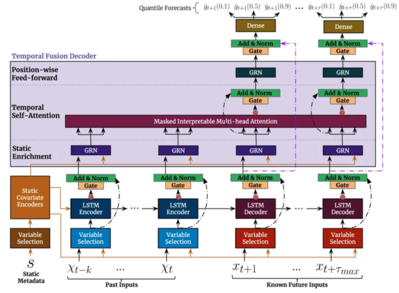
1. A Comparative Study of Forecasting Models Using the Temporal Fusion Transformer in Pharmacy Chain Sales Systems. (2026). International Journal of Automation and Smart Technology, 16(1). https://doi.org/10.5875/5psfnf83

International Journal of Automation and Smart Technology (AUSMT) follows a fully open-access policy, and authors are not required to pay any publication or processing fees.
The research areas of the journal include but are not limited to the fields of mechatronics, automation, ambient Intelligence, sensor networks, human-computer interfaces, and robotics.
These technologies should be developed with the major purpose of increasing the quality of life as well as working towards environmental, economic, and social sustainability for future generations.
AUSMT endeavors to provide a worldwide forum for the dynamic exchange of ideas and findings from research of different disciplines from around the world. Also, AUSMT actively seeks to encourage interaction and cooperation between academia and industry in the fields of automation and smart technology.
For the aforementioned purposes, AUSMT maps out 5 areas of interest. Each of them represents a pillar for a better future life: